L-Citrulline Vs. L-Arginine: Why Honeypezil's Label Includes Both
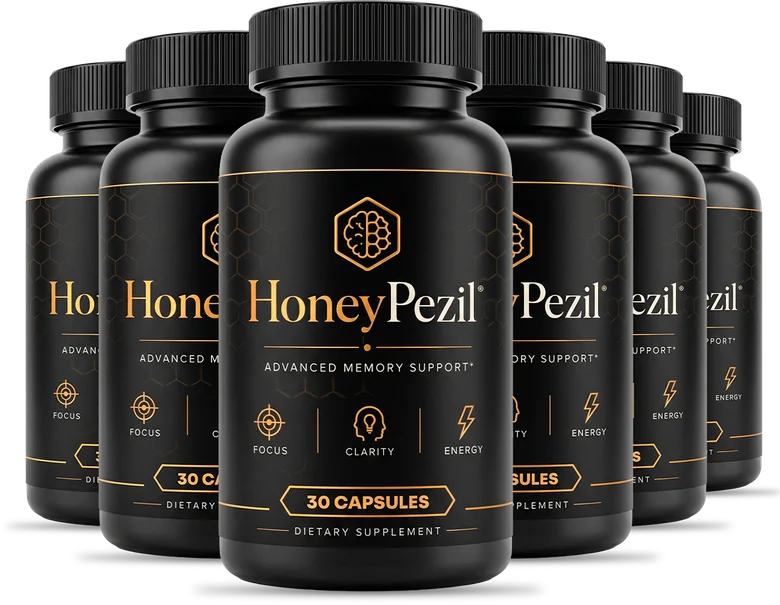
L-Arginine and L-Citrulline both feed into the same nitric oxide pathway, but they behave very differently once swallowed — which is likely why Honeypezil's label includes multiple forms of each.
Understanding the difference explains the formulation logic, even if the memory-and-focus branding around it is a separate question.
The shared destination: nitric oxide
Both L-Arginine and L-Citrulline ultimately support the body's production of nitric oxide, a signalling molecule that relaxes blood vessel walls and supports circulation. Where they differ is in how efficiently they get there after being swallowed.
Why L-Arginine alone has a limitation
Orally consumed L-Arginine undergoes substantial breakdown in the liver and gut before reaching general circulation (first-pass metabolism), which significantly limits how much actually becomes available to support nitric oxide production.
Why L-Citrulline is often paired alongside it
L-Citrulline largely bypasses this liver breakdown and gets converted to L-Arginine primarily in the kidneys. Research indexed on PubMed has found oral L-Citrulline can raise plasma L-Arginine levels more effectively than an equivalent oral dose of L-Arginine itself — a genuinely interesting pharmacokinetic detail, not just marketing framing.
Why multiple forms of each
Honeypezil's label lists L-Arginine as a base amino acid and again as L-Arginine AKG (bound to alpha-ketoglutarate), and lists L-Citrulline as both the HCl and Malate forms. Different bound forms can affect solubility, stability and manufacturing considerations, though whether they meaningfully change the amino acid's effect once absorbed is less clearly established than the basic Citrulline-versus-Arginine comparison above.
What this means for cognition specifically
Applying this to Honeypezil
The presence of both amino acids in multiple forms on Honeypezil's label reflects a reasonable, if amino-acid-heavy, approach to the nitric oxide pathway. It does not, on its own, support the memory-and-focus positioning the brand leads with — that would require a different, additional set of ingredients that are not on this particular label.